Showing posts with label RPGs. Show all posts

Saturday, May 28, 2011

How are you enjoying the dark ages of computer D&D?


Remember when the 4th Edition of Dungeons & Dragons came out, and a lot of old school tabletop players criticized it for being geared toward videogames? That was three years ago, and funnily enough, there still hasn't been a new videogame release that fully implements those videogame-ish 4th edition rules. In fact, until last week, there hadn't been a new D&D video game of any kind in the last four years.

These are dark days for fans of D&D computer games, and it doesn't look like things are going to get better any time soon. Three news items popped up recently to remind us of how bad things have gotten.

Friday, May 13, 2011

Planescape 2: Electric Boogaloo


Apparently Obsidian CEO Feargus Urquhart is feeling nostalgic lately. First it's his public campaign to win an Icewind Dale sequel. Now this:
“I remember right after finishing Planescape: Torment I spoke to Chris Avellone [Obsidian creative director] and asked what he wanted to do, and he was like, ‘I don’t wanna do a sequel!’ We haven’t talked about it in ten years, but it might be different now. But a lot of revisiting old games is about saying, ‘okay, that worked in 1999, what would work now?’ And how would you do it again?”
OK, clearly this is just blog fodder. Urquhart seems to be humoring the interviewer - based on the quote, he doesn't strike me as being all that thrilled with the idea. And why would he be? The original game's ending is about as final as you can get. And by now it's so old that only ancient gamers and true RPG connoisseurs have played it, and only a subset of them would like to see a sequel (for some, it would be akin to making Citizen Kane 2). And on top of all that, PST apparently didn't sell all that well. Other than that, it's swell idea.

But still, as a topic of conversation, I find it irresistable (I did say it was blog fodder). In my post about a potential Icewind Dale 3, I ran through what I thought were the essential elements of the original that would have to be continued in a sequel (hack and slash, full party creation, etc). In contrast, I don't think the hallmark of PST was a particular style of gameplay. It was more about the story, characters, and - probably most importantly - the setting.

The challenge in making a Planescape 2 would be one of narrative design. The first game was brilliantly intricate, and featured possibly the greatest ending in an RPG videogame ever. Figuring out how to restart it would be as hard as trying to continue Baldur's Gate after the epic events of Throne of Bhaal. Actually, harder. In the case of Baldur's Gate, the hallowed property was the sequel, which itself used a fair bit of hand-waving to bridge the gap between itself and the original. PST was a standalone masterpiece - a hole-in-one, to use a golf metaphor - and thus a much more difficult act to follow.

That said, problems of narrative design are always solvable when you have smart writers, as Obsidian does. The Planescape setting is in many ways a writer's wet dream, precisely because it's so "out there." The lack of verisimilitude provides a smorgasbord of options, which I'm sure would allow writers to come up with a story that connected to the original without trampling on continuity. It could be done.

The question is, should it be done? You tell me.

Thursday, April 14, 2011

Game of Thrones and the Martin-ization of RPGs

Game of Thrones premieres on HBO this Sunday, and if you're like me, you have wholly unreasonable expectations for it. In case you don't know what all the fuss is about, this isn't just another medieval drama on premium cable to compete with The Borgias and Camelot. The new HBO series is based on George RR Martin's A Song of Ice and Fire novels, which are held up by many as a modern day Lord of the Rings.

Last week's New Yorker went topical with a full-length feature story on Martin called Just Write It! - a title that captures the feelings of his jonesing fans, who have been waiting for over five years for his next book. After reading the article, I'm not too optimistic about getting that sweet, sweet closure that can only come with the completion of the series. This bit leaves the impression that Martin is utterly psyched out:
"I don’t want to come across as a whiner or a complainer," Martin said, as tinted light from the afternoon sun filtered through the stained-glass windows. "No! I’m living the dream here. I have all of these readers who are waiting on the book. I want to give them something terrific." There was a pause. "What if I fuck it up at the end? What if I do a ‘Lost’? Then they’ll come after me with pitchforks and torches."
At least the fans have the new HBO series to focus their attention on now. Behind those stained-glass windows, Martin is probably cackling maniacally with the knowledge that someone else has willingly accepted the curse of high expectations.

He's suppressing a cackle in this picture. You can tell.
Of course, the series will ultimately only generate more interest in the books. By the time the last episode airs, the latest release date for Martin's next book, A Dance with Dragons, will be just around the corner, and...

Regardless of whether Martin ever finishes the series, the impact of the existing books is undeniable - and that impact can be felt in RPGs. Once strongly identified with Tolkienesque high fantasy, RPGs seem to have moved rapidly toward the gritty and gray low fantasy of Martin. Neverwinter Nights 2 and the Dragon Age games - with their focus on knights, blights, and political fights - certainly come to mind. However, even RPGs that aren't so narrative-driven seem to be going darker and more realistic. 

Martin isn't responsible for all that. The larger trend here is that there are more adults playing videogames these days, and those adults want adult content. There's also the fact that The Forgotten Realms are, thanks to a legal dispute, starting to live up to their name. Neverwinter Nights 2 notwithstanding, the Realms has always been the dominant high fantasy setting in Western RPGs - without it, the landscape looks a lot different.

You could also make the case that game development realities play a part. It is without a doubt harder to create a high fantasy setting because you can't lean as much on the real world as a model. High fantasy makes sense for games that are based on an existing IP like the Realms, or for MMOs that need something unique to set themselves apart. For everyone else, a Martin-esque approach is appealing. 

Anyway, I'm rambling. Is it Sunday yet? Because I'm jonesing for a little Song of Ice and Fire, in whatever form I can get it.

Tuesday, April 12, 2011

6 mortifying moments that make you wonder about RPG developers

As a genre, RPGs aren't especially controversial. A Huffington Post article from last year rating the top 15 most controversial videogames included exactly one RPG - Mass Effect - and basically acknowledged that the kerfuffle over it was sheer nonsense.

Maybe it's the genre's origins in tabletop Dungeons and Dragons, an all-ages game that at one time got plenty of attention from anti-satanic church ladies while doing nothing to deserve it. Or it could be that RPGs almost always feature fantasy or sci-fit settings with non-human enemies, which - in contrast to shooters - makes it hard to relate the violence to real-life. Or maybe RPGs are just better at hiding the naughty stuff, what with their longer play times and loads of optional, nonlinear content.

Here's one thing we can rule out: It's not because RPG developers are more high-minded than their counterparts. If you think otherwise, just take a look at the following list of tasteless moments from RPGs. I won't claim that these are the most controversial things out there, as I haven't played every RPG (if you know of better examples, please share). And actually, they're all quite harmless as far as I'm concerned. However, they certainly make you wonder what these people would be doing if they weren't making games.

Naturally, this list doesn't include things like obscure Japanese RPGs, or user-created mods. If it did, it would probably set a record for longest list on the Internet.

Monday, April 4, 2011

Saving the game, ruining the story

Thanks to the miracle of GOG, I've been catching up on some older games I never got around to playing for whatever reason. For the past couple of days, I've been trying my hand at Gothic 2, a sandbox RPG from German developer Piranha Bytes that came out back in 2002. I have two major complaints so far:
  1. The unusual control scheme requires both hands most of the time, making it more difficult for me to enjoy a beer while playing (are we sure this is a German game?).
  2. I die a lot. I mean, a really lot. Your character starts out as a weakling, a fact that NPCs seem to point out at every opportunity - often before, during, and/or after an ass-whipping.
I don't mind starting off weak. In fact, I'm anticipating a sense of satisfaction when my character finally turns the corner and can actually win a fight without hiding behind a city guard. I don't subscribe to the idea that everything the PC does must be heroic, and find it rather pathetic when games feel the need to stroke the player's ego. I've actually had a few chuckles over the utter lack of respect your character receives at the start of Gothic 2. It's a refreshing change.

No, the thing that I don't like is reloading.

Wednesday, March 30, 2011

Why RPG loot has lost its luster

If you've ever played a tabletop RPG, you probably know what it's like to love a magic item. You probably remember how you got that first game-changing piece of equipment, be it from a monster's horde or a hidden treasure chest. You probably cherished it and kept it for the entire lifespan of your character (or at least until your DM moved to another town). In fact, that magic item probably became a key part of your character's identity.

On the other hand, if your only experience is with computer RPGs, you might not know what the hell I'm talking about. Character equipment is not only a defining characteristic of RPGs, but one that is widely assumed to be of great importance in the age of market-tested game development. Yet in many RPGs, item design seems like little more than an afterthought. Wagonloads of magic items are joylessly awarded throughout the game, with no evidence that actual creative work went into any of them. So what gives?

On closer inspection, it's not entirely surprising that computer RPGs have been mostly unsuccessful at reproducing that tabletop feeling of "love at first loot." For one thing, there's no DM in computer RPGs to tailor rewards specifically for the PC. For another, there's a tendency to dole out more loot in computer RPGs, which has the effect of diluting the importance of any one item (more on that later). And then there's the depressing fact that designing items is a finishing touch in an industry where finishing touches increasingly take a backseat to publishing deadlines.

"Precious? Eh, not so much."
But assuming developers had the ability and resources to create truly compelling magic items, what would they look like? Here are some of the characteristics that I think make magic items stand out as something more than vendor trash.

Friday, March 4, 2011

Is this what you call roleplaying?

Nemorem is torn about what to post today. He or she (depending on whether this is regular Nemorem or FemNem we're talking about here) has a number of different issues on his or her mind, and can't figure out a way to tie them all together in one post. In short, Nemorem needs help making a decision.

 Bitch about the dialogue wheel again
 Follow up on the (nonexistent) DA2 toolset
 Go off-topic
 Screw it - I'd rather be reading Kotaku

Sunday, February 27, 2011

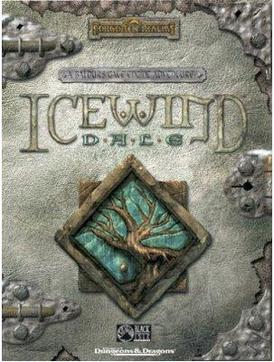
Obsidian angling for Icewind Dale 3

My next screed - which I was planning to post in the coming days - was to be titled "Why we need Dungeons & Dragons." It's been percolating in my head ever since I read Tiberius' post on the prospects of a Baldur's Gate 3. I was going to go over the various reasons why there's no substitute for the D&D ruleset and settings, and lament the fact that Hasbro and Atari are locked in court battle over the rights. I just wanted to finish a couple of posts on Dragon Age 2 (the topic du jour) before getting to work on it.

Then I saw this:
Obsidian is also pushing on updating a former Black Isle property: Icewind Dale 3. "I was talking to Atari last week," [Feargus Urquhart] confides, "and said why don't we do this?" The old series, he says, didn't end because of low sales. "They stopped being made because of licensing issues, and Interplay going out of business, and BioWare moving on to console, and a whole lot of things. So a part of it is, why not go make Icewind Dale 3? You can't spend $20 million on it, but why not go make it?"
I actually don't know how newsworthy this is. My impression is that developers and publishers throw around a lot of ideas, the vast majority of which never result in a game being made. Given that, I'm not sure what to make of the fact that Mr. Urquhart chose to disclose this. Good sign? Bad sign? You decide.

One thing's for sure: If Icewind Dale 3 is going to be made, Obsidian is the obvious choice to do it. They have the old-school RPG cred and a history with this franchise in particular. It's interesting that the last time they ventured into the Forgotten Realms was for the Storm of Zehir expansion, in which they brought Icewind Dale-style party creation to Neverwinter Nights 2. Hmm...

Icewind Dale is no Baldur's Gate, but it's still fun to speculate on what a sequel would look like. To me, the essential elements are:
  • Set in the Icewind Dale region (duh)
  • Full party creation
  • Hack-and-slash style, with tactical combat
  • More dungeon crawl than sandbox
The most interesting question about an Icewind Dale sequel is, what engine do you use? To me, Icewind Dale is the game that's hardest to decouple from the Infinity Engine due to its emphasis on combat. Players don't revere it for its characters (Baldur's Gate) or writing (Planescape: Torment). To the extent they revere it at all, it's for the way it puts the D&D combat mechanics and character advancement system through their paces. It would take a special game engine to recapture that feel.

Anyway, if you're interested, there's a lot more discussion about this over at RPGWatch, which is where I picked up this "news" item.

Wednesday, February 23, 2011

Dragon Age 2: Who's in charge here?

Dragon Age 2 has gone gold, the demo is out, and Bioware-fashioned hype has descended on the RPG-o-sphere like darkspawn on an unfortified village. In an attempt to inflame the passions of forum-dwellers on Valentine's Day, Bioware confirmed the love interests in Dragon Age 2 and - if that weren't enough - posted short stories demonstrating the badassery of the characters. That kicked off a 169-page (and counting) thread mostly revolving around the sexual orientation of the love interests, including some speculation that all of them are bisexual.

Totally unfounded, surely. Only an Internet forum could air such a wild notion. But wait...
And please don’t close off all those options to players of the wrong gender. Great as it is, Mass Effect is not such a literary masterwork that it would completely ruin a delicately crafted character to check the bisexual flag. And we know that’s all it takes, because modders have already done it.
That's from a recent PC gamer article 15 things we want to see in Mass Effect 3. For comedic value, I'll point out that the quote is an addendum to item number 5: "More convincing romances." Because presumably it's "convincing" when all the love interests aren't picky about the gender of their partners.

Personally, I would prefer zero bisexual love interests. It's not that I think it's such a rare phenomenon. Rather, it's the meta. It's the knowledge that the sole reason bisexual characters are being included is so that they can do double duty as love interests. That sort of thing bothers me, though I admit my perspective probably isn't representative of players at large. If it does turn out that all love interests in Dragon Age 2 are bi, I will probably skip romances entirely. Yep, I'll take my ardor and go home.

But I (like just about everyone else) have said enough about romances lately, and the larger issue here isn't about love interests per se. To illustrate, I'll throw in another thread from the Bioware forums, in which some players lobby for being able to select the talents and skills of their companions - even those that were logically "earned" before the character joined the party. After all (the argument goes), why should I be forced to turn away an otherwise desirable character just because his or her stats don't fit my party's needs?

In both cases, what players are really asking for is more power to shape the game world to their liking. In the case of bisexual love interests, players don't really want characters who go both ways, but rather characters who go their way. In the other example, they want control over a more humdrum aspect of the characters - their statistical makeup.

Sunday, February 6, 2011

Building a better video game romance

Ever since Baldur's Gate 2 introduced players to the charms of Aerie, Jaheira, Viconia, and Anomen, romances have generated more discussion than just about any other feature I can think of. It's almost gotten to the point where the subject deserves its own Bioware forum, where players can knock themselves out speculating about who's romanceable, sharing tips on how to get the "best" results, and generally engaging in a lot of fantasy kissing-and-telling.

I, of course, am above all that. Sure, I have romanced all the female love interests in every Bioware game I've ever played, but that was just for the sake of cultural awareness, scholarly interest - you know, that sort of thing. Moving on...

One of the most interesting things about romances is the very fact that people find them so interesting. The knee-jerk reaction to this is that people who enjoy RPG romances are either sex-starved nerds clutching their 20-sided dice, or female. However, it's become increasingly obvious that not all RPG romantics can be pigeonholed that way.

Alistair
For me, the inclusion of romances in RPGs seems natural. RPGs are supposed to offer the opportunity to live a different life - why shouldn't that include one of the things that makes life worth living? In fact, you could argue that a game like Dragon Age - with all its romantic content - doesn't go far enough. If it truly and accurately modeled human needs and desires, we'd be spending a lot more of our time working on our relationships with Morrigan or Alistair, and a lot less time working on our Herbalism skills.

But I'm not advocating for that, exactly. Rather, I'm advocating for better romances. Because as interesting as they already are, there's certainly room for improvement.

Monday, January 31, 2011

5 old-school RPG features that should stay dead

There are times when I survey the current RPG landscape and wonder if I've become a hopeless curmudgeon. Part of my pain is that DnD has always been the main attraction for me, and there's no enticing DnD title on the horizon (aside, perhaps, from the massively multiplayer Neverwinter). Another part of it, which I'm wont to harp on here, is that recent RPGs seem to have abandoned many features that were staples of the genre during its golden age.

An interesting question is whether younger players are fundamentally different than older ones, or whether it's more the case that RPG developers are aiming for wider audiences. I tend to focus more on the latter, but I'm forced to admit the former as a possibility as well. As games mature, we're likely to see more and more generation gaps, with players of bygone eras preferring old-school games that younger players find intolerable for various reasons.

And let's face it. There are aspects of older RPGs that were flawed, inconvenient, or just plain hard to take. And I'm not even talking about the really old computer RPGs like Bard's Tale or Ultima, which even this curmudgeon can't handle. With so many longstanding franchises getting updates this year - Diablo, Elder Scrolls, and the aforementioned Neverwinter, to name a few - it seems like a good time to reflect on some of the ways RPGs have improved in recent years. Consider this a companion piece to last week's cranky post on how RPGs are being dumbed down. Yes, this blog is fair and balanced.

Here, in Internet-mandated list format, are five old-school design features that deserve (perma)death.

Monday, January 24, 2011

5 features that are dumbing down RPGs


At their worst, the computer RPG designers of yore were like sadistic dungeon masters, drunk on power and determined to punish anyone who attempted to finish their game. For players, rewards were scarce, death was arbitrary, and hoop-jumping was de rigueur. Even the simplest Fedex quest could give you fits, as you tried to track down a well-hidden NPC (possibly locked behind three doors, each requiring you to solve an algebraic word problem).

Then RPG designers got soft. Those sadistic DMs turned into something more like those genial, fiercely humanistic soccer moms who insist on trophies for everyone. Many features that were once considered standard in RPGs were removed or reformed, with the guiding principle being something along the lines of: "Take out everything that isn't fun."

There are many reasons for this shift. I could write a book detailing how wider societal changes have led the genre to where it is today. Shifting attitudes about the middle class and the role of...

But no, seriously, it's all about World of Warcraft. WoW has proven something that few likely suspected prior to its release: that a fantasy RPG can appeal to a mass market and make lots and lots (and lots) of money. Thus it's no surprise that many of the features that have crept into traditional single-player games either originated in WoW, or were inspired by its "all fun, no hassle" design philosophy.

That's not a bad philosophy. And, it must be said, many recent changes to RPGs - especially those driven more by player feedback than the WoW copycat mentality - have been positive. Still, in the all-consuming desire to make every single moment of their games fun, I think single-player game designers are at risk of losing the sense of challenge that makes games rewarding.

Since the Internet seems to favor things in list format, here are the top 5 features that are serving to "dumb down" RPGs:

Sunday, January 16, 2011

Being Hawke: The metaphysics of Dragon Age 2


Imagine that a foreign entity has gotten inside you. At a certain moment in your life, the entity took complete control of your body. It changed your name and appearance, infused you with new abilities, and uprooted you from your place in the world. A few friends and family remain in your life, but they don't seem to notice the change. And actually, you know none of this because the entity has banished your mind to some desolate nether plane. You have effectively become a brain in a vat, one with no connection to any stimuli.

Question: Is the person walking around in the real world still you?

Thursday, January 13, 2011

Neverwinter's Forge toolset might not suck


There was much dismay in the Neverwinter Nights community when word got out that the next installment in the series - if you can even call it that - would be a massive multiplayer game developed by Cryptic Studios. That was certainly my reaction. I'm only being slightly melodramatic when I say that when I heard about this, my heart sank, my eyes rolled, and soon after, my mind buried any thoughts that the Neverwinter Nights legacy would continue.

Maybe - just maybe - that burial was premature. My assumption was that the new game would have nothing except a name in common with the other games in the series. As it turns out, the game - being titled Neverwinter - shares only half of the name. However, some of the other information that's come out has been mildly encouraging.
Most notably for modders, Neverwinter will include a toolset called Forge. As the game isn't due out until late 2011, information about Forge is understandably sketchy. I trawled various articles for what I could find, and turned up a few interesting tidbits.

Monday, January 10, 2011

Getting hot and bothered over RPG romances


If there's a Bioware RPG coming up, it must be time for a romance controversy. A few weeks ago, David Gaider had this to say about critics of same-sex romances in Dragon Age 2:
So long as romances of any kind are optional and need to be actively pursued by the player in order to be experienced, they simply don't have a leg to stand on. Advocating that nobody should be able to have content you don't intend to personally use is largely pointless - outside of a vague notion that such efforts should go towards other things, instead. Personally, it's not a lot of effort to include them. The resources we can devote to a minority of players isn't great, but I imagine to those players it's quite worth it... and I would hope that some folks could be sensitive enough to be happy for those players, at the very least out of the selfish notion that they may one day end up in the minority of some content issue and receive the same consideration if nothing else.
If you've seen that quote before, it may have been on one of the blogs that pounced on it during the slow news weeks around Christmas, reposting it under headlines like "David Gaider responds to critics of same-sex romances." The only problem is that he wasn't responding to critics - or at least, they were nowhere to be found in the Bioware forum thread where he posted his remarks. The thread was about Bioware's confirmation that there would be same-sex romances in Dragon Age 2, and reactions ran the gamut from "meh" to "yay!" Nowhere in said gamut did I see anyone suggest that the romances shouldn't be included. Gaider's response was to someone claiming there were a lot of homophobic people on the Bioware Social Network.

So yeah, not much of a controversy. I'm not accusing Gaider or the blogs of erecting a straw man here. I just think it's too bad that these unnamed critics - if they do exist - didn't show up. Because I think there are some legitimate concerns about including same-sex romances in a fantasy RPG. And by "legitimate," I mean concerns not motivated by homophobia.

Wednesday, January 5, 2011

Where are all the modules for Dragon Age?


Looking at the Projects Page on the Bioware Social Network, two things seem perfectly clear: 1) players need a better way to find Dragon Age modules, and 2) the current crop of standalone adventures is sorely lacking. The most popular mod is apparently something called Sappho's Daughters, which I hesitate to even try to categorize. After that, it's a lot of utility mods, some Sappho's Daughters spinoffs, and a remake of the Irenicus dungeon from Baldur's Gate 2. Then, finally, you get to something that could truly be called an original standalone adventure (Alley of Murders).

So what gives? Many people, myself included, assumed Neverwinter Nights 2 builders would migrate to Dragon Age en masse and start producing high-quality mods. But judging from the number of standalone adventures, that doesn't seem to have happened. With Dragon Age 2 looming, it seems like an appropriate time to take stock of the situation and ask why we haven't seen more finished projects by now.

The typical answer is that the Dragon Age toolset is simply too difficult. That's fine as far as two-word explanations go, but a more comprehensive answer might include the following:

Tuesday, December 28, 2010

Emergence


Right then.

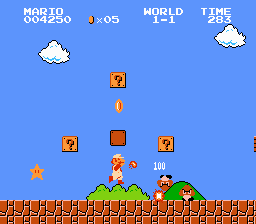
My geek love for the New Yorker and my geek love for video games recently converged under the title Master of Play, an article about legendary game designer Shigeru Miyamoto, creator of Super Mario Bros. and many other classics.

Well, to be completely accurate, I’m not a video game geek per se. I’m more of a fantasy/modding/computer roleplaying game geek. Still, the article was fascinating as a portrait of a seminal figure in video games, and more importantly, contained a satisfying amount of general game design discussion. If you haven’t done so, you should read the whole thing online. I found this description of Super Mario Bros. particularly interesting:
The game had just fifteen or twenty dynamics in it—how the mushrooms work, how the blocks react when you hit them—yet they combined in such a way to produce a seemingly limitless array of experiences and moves, and to provide opportunities for an alternative, idiosyncratic style of play, which brings to mind nothing so much as chess. Will Wright cited the theory of emergence—the idea that complex systems arise out of the interaction of several simple things.
This, I would argue, doesn’t describe most RPGs.